October 09, 2026



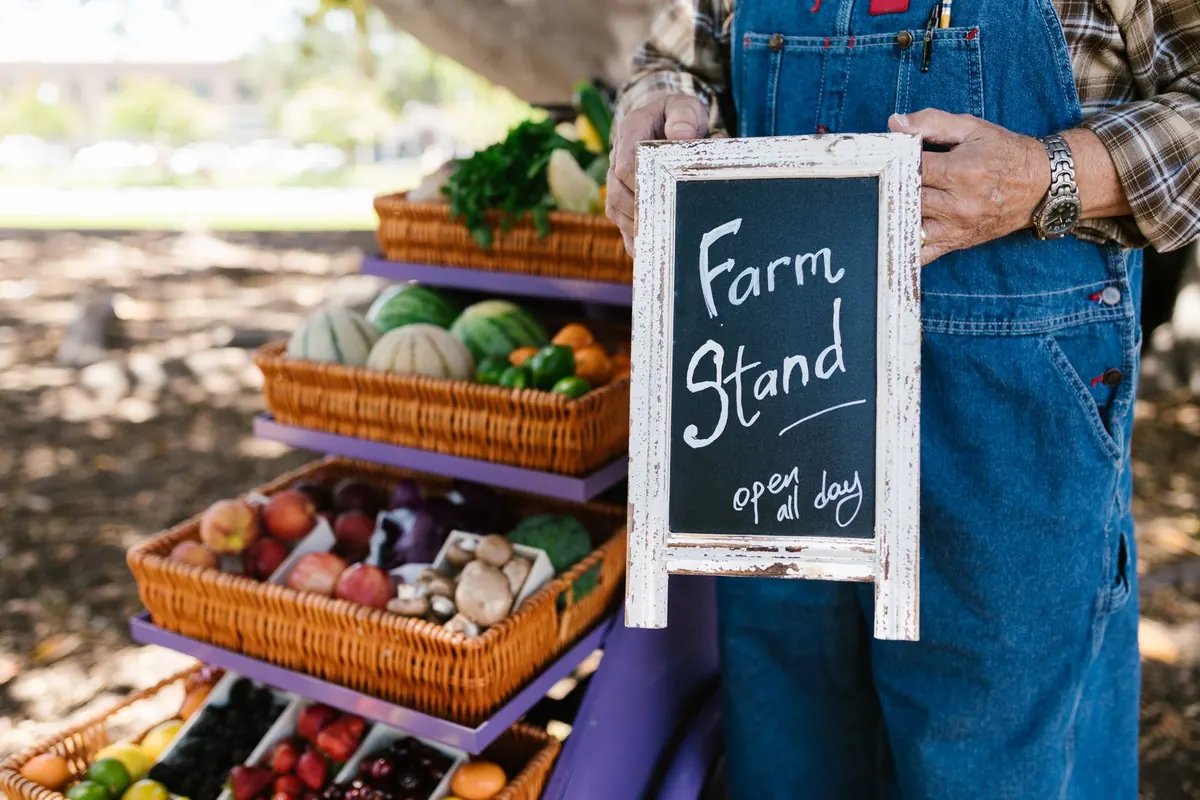
A farmers market tells you more about a town than its main street does. Not the storefronts, which have often been polished for visitors, but the folding tables: what people grow, what they bake when they get up at four in the morning, what they argue about over the last quart of strawberries. Drive forty minutes in any direction from the middle of the valley and you can spend a whole day inside that conversation.
The trick is to stop treating a market as a stop. Treat it as the anchor of a morning, then build a walk around it. Here are three market towns worth the fuel, plus the practical bits that make the difference between a nice hour and a good day.
Most small markets run on a fixed weekday and a fixed season, and both shift more often than you'd expect. A market that fills the square on Saturday in July may move indoors or vanish entirely by November. Check the local schedule the week you plan to go rather than trusting a memory from last summer.
Ridgeway's market occupies the flat gravel lot behind the old mill, and it starts early enough that the church bells ring partway through setup. This is the most produce-heavy of the three: tomatoes in every color that isn't red, garlic braids, bitter greens in spring, and a stubborn commitment to squash through October.
Two stalls are worth the trip on their own. A sourdough baker works out of a wood-fired oven and sells out before nine, so if you want a loaf, go first and browse after. A beekeeper nearby pours honey from the same hives year after year, which means you can taste the difference between a wet spring and a dry one. Ask about it. That's the sort of thing small-market vendors are waiting for someone to ask.
From the lot, a paved path follows the river east for about a mile, crosses at the low bridge, and returns along the far bank through a stand of cottonwoods. It's flat, shaded after the first bend, and short enough to finish before the car gets warm. Watch for the heron that hunts the shallows below the bridge; it has been there every time I've walked it.
Millbrook does its market at the end of the working day, from late afternoon until dusk, on the green in front of the library. It's smaller than Ridgeway's and more social. People come straight from work, kids run the perimeter, and someone usually brings a guitar that nobody asked for.
The signature here is cheese — a small creamery sells fresh chèvre and a firm wheel aged in a cellar under the shop, along with stone fruit from an orchard up the valley road. Because it's an evening market, dinner is part of the plan. Vendors sell hot food, and there are benches. Bring a blanket if the evenings have turned cool.
The old rail bed starts two blocks north of the green and runs straight and level through the trees. You don't need to walk far. Twenty minutes out and twenty minutes back is enough to work off a plate of something fried, and the light through the maples at that hour is the real reason to come on a Tuesday rather than a Saturday.
Cedar Falls is the outlier: a Sunday market on the fairgrounds with room to spread out, covered stalls, and a parking lot that doesn't require parallel skills. You'll find preserves in jars with handwritten labels, wool from a neighboring farm, cider pressed in the fall, and a rotating cast of people selling things they made in a garage.
This is the best market of the three for a group, because there's space for kids to run and enough seating to sit down with coffee and argue about which stall to visit next. It's also the most weather-dependent — the fairgrounds are exposed, and a windy morning there feels ten degrees colder than it does downtown.
A gravel trail leaves the north end of the fairgrounds and climbs gently to a gorge overlook. The pitch is short but real, so wear something with grip and skip it after heavy rain. The reward is a view down the length of the valley that makes the whole drive make sense.
Fill the tank the night before, since the stretches between these towns can be long and services thin. Take a jacket regardless of the forecast. Plan on two to three hours total at each stop — an hour at the market, an hour on the walk, and the rest lost to a bakery counter or a hardware store you wandered into.
And go with a loose plan. The best parts of a market day trip are rarely the ones you scheduled: the grower who talks you into a vegetable you've never cooked, the overlook you find because you took the wrong turn out of the parking lot, the second loaf of bread you buy on the way home because the first one didn't make it past the town line.
Photo: RDNE Stock project / Pexels
Stories and insights from the valley.
Copyright © 2026 Vale Column. All rights reserved. Vale Column.