October 09, 2026



Wildflower season doesn't arrive all at once. It climbs. The first color shows up on south-facing slopes and in sheltered creek bottoms, then moves uphill a few hundred feet a week until the high meadows get their turn. Guess wrong and you can hike a trail that peaked ten days ago. The fix isn't a spreadsheet of bloom reports — it's a short, repeatable pack list and a few habits that keep you, and the flowers, out of trouble.
Pack it once, keep it by the door, and you can leave on a Saturday morning in the time it takes to fill a water bottle.
Everything below fits in a daypack or a canvas tote. None of it is expensive, and half of it is probably already in your car.
An app can put a name on a flower in seconds, and it can also be confidently wrong. Most match shapes first and then use your location to narrow the field, which means a good guess in the right county can still be the wrong species. Treat the first answer as a suggestion, not a verdict.
A single close-up of a bloom is the hardest possible puzzle. Photograph the flower from the front, from the side so the cup or spur shows, a clear shot of a leaf attached to the stem, and one wide frame of the whole plant in its setting. Location and habitat do as much work as petals.
Compare the answer against a local native plant society list, a printed regional flora, or a ranger station handout. If two sources disagree, write possible in your notes and move on. And never eat a wild plant because an app named it — identification mistakes with edible-looking plants can be serious, so learn foraging from a qualified local instructor instead of a phone.
Bloom walks look gentle. They're still several hours outdoors. Reapply sunscreen every couple of hours and wear the hat even under cloud cover. Hike early if you can; the light is better for photographs and the heat is easier to manage.
Watch for ticks in tall grass and brush, and check your legs, waistband and hairline when you finish. If you find an attached tick or develop a rash or fever afterward, contact a healthcare professional rather than guessing.
Learn poison oak in its spring form — shiny new leaves, often reddish — and stay on the trail where it grows. If you brush against it, wash with cool water and soap soon after.
Drink before you're thirsty, and turn around when you've used half your water rather than when the bottle is empty. Most spring walks run two to four hours, and the pace that finds the most flowers is a slow one.
Plan on stopping more than you expect. Crouch down and look at what's growing at your feet; the tiny stuff is usually the most interesting. Build in a margin: an extra hour, an extra layer, an extra bar at the bottom of the pack.
Busy trails and fragile flowers are a bad combination. Most of these take no effort at all:
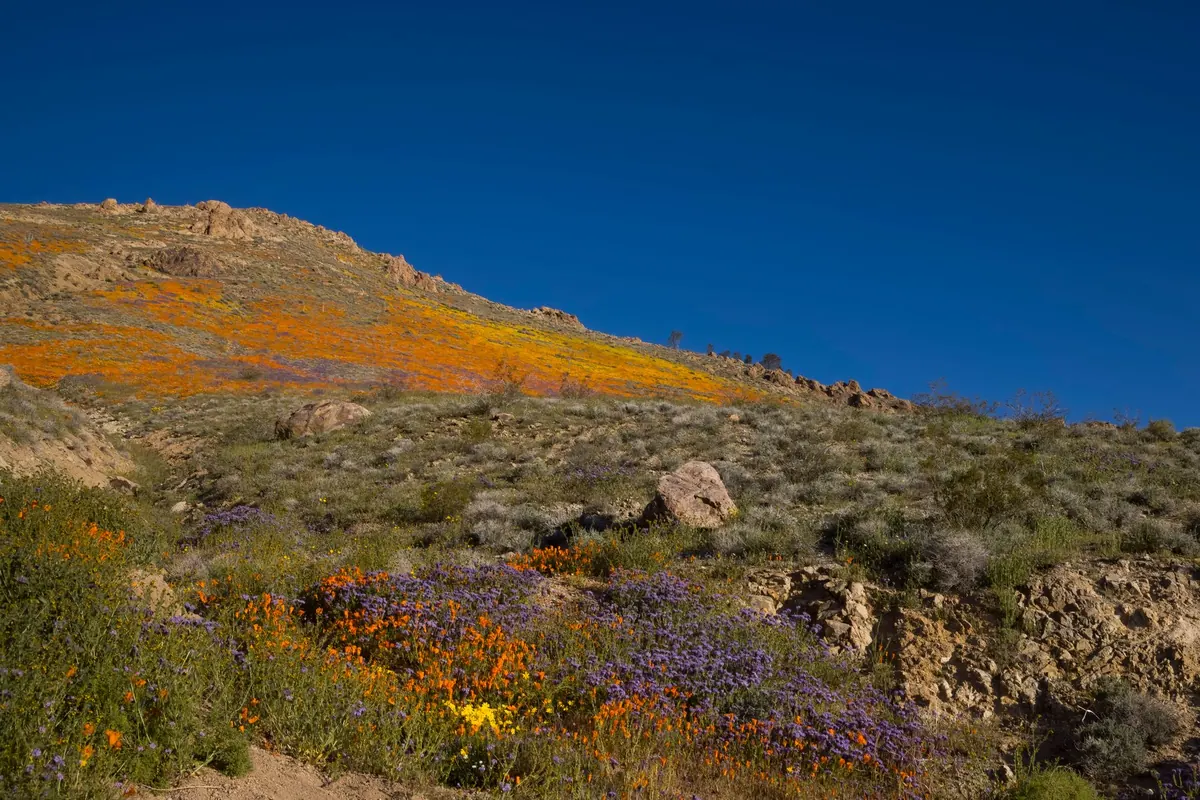
Photo: Guy Seela / Pexels
Stories and insights from the valley.
Copyright © 2026 Vale Column. All rights reserved. Vale Column.